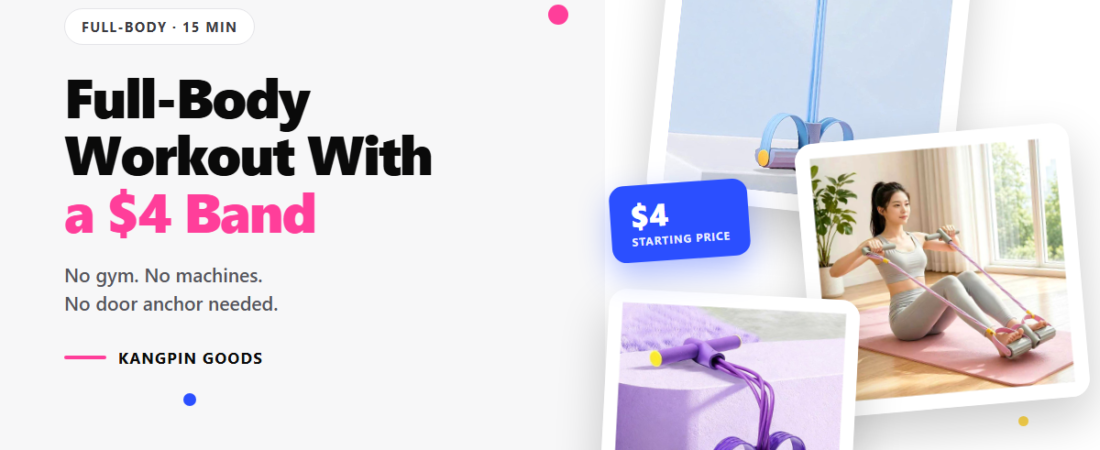
Most home workout gear asks you to commit first: a gym membership, a rack of dumbbells, a door anchor that dents the frame you’ll have to explain to your landlord. A pedal resistance band asks for four dollars and about two square feet of floor.
That is the whole pitch. This guide covers what to look for before you buy, six exercises that cover your whole body, and a three-day weekly plan that takes about fifteen minutes a session.
Why a pedal band fits a small apartment
There are three common ways to add resistance at home, and they are not equal when space is tight.
- Dumbbells — effective, but a useful range of weights takes up a shelf and gets expensive fast.
- Door-anchor bands — cheap and compact, but they load the door frame and hinge. In a rental, that is a deposit conversation.
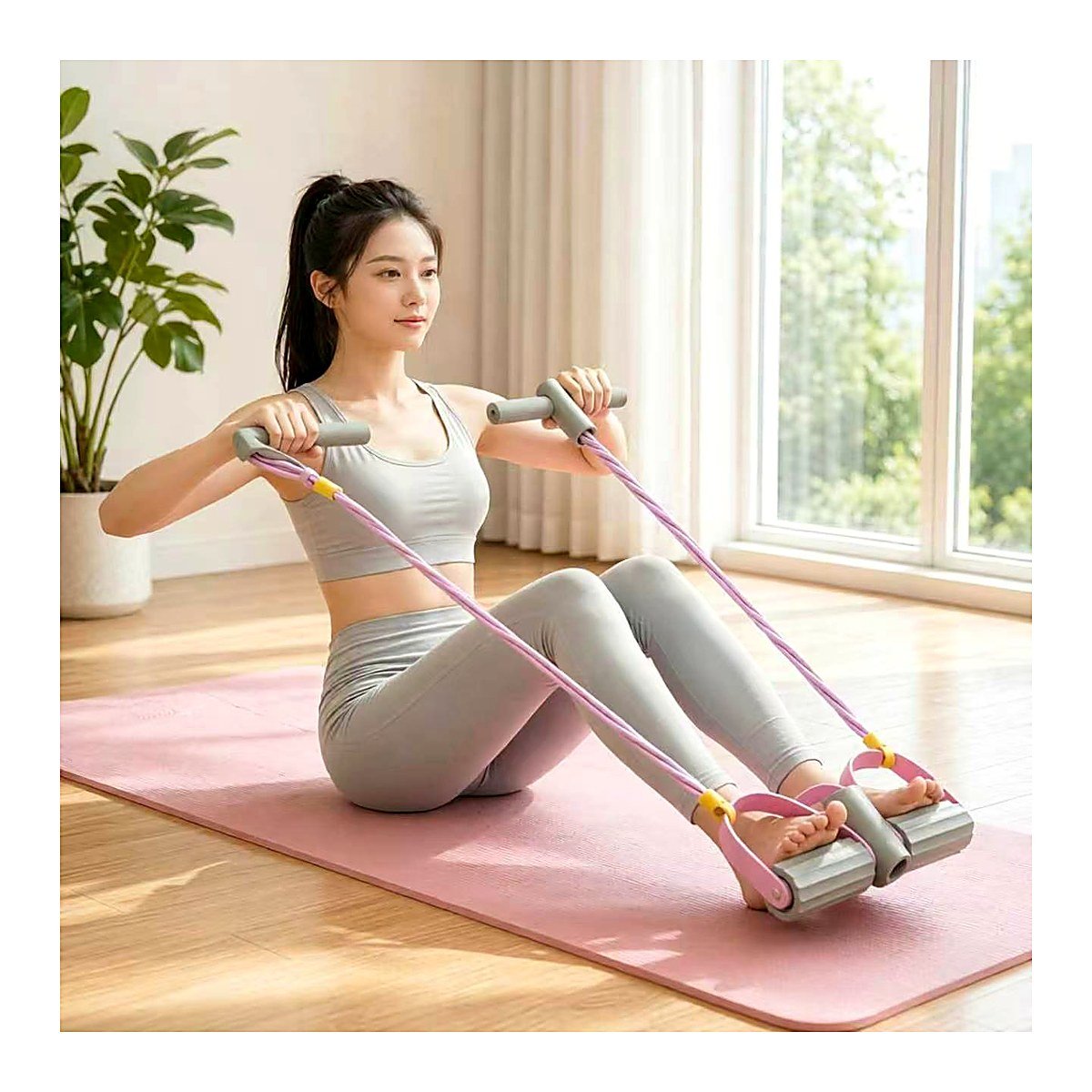
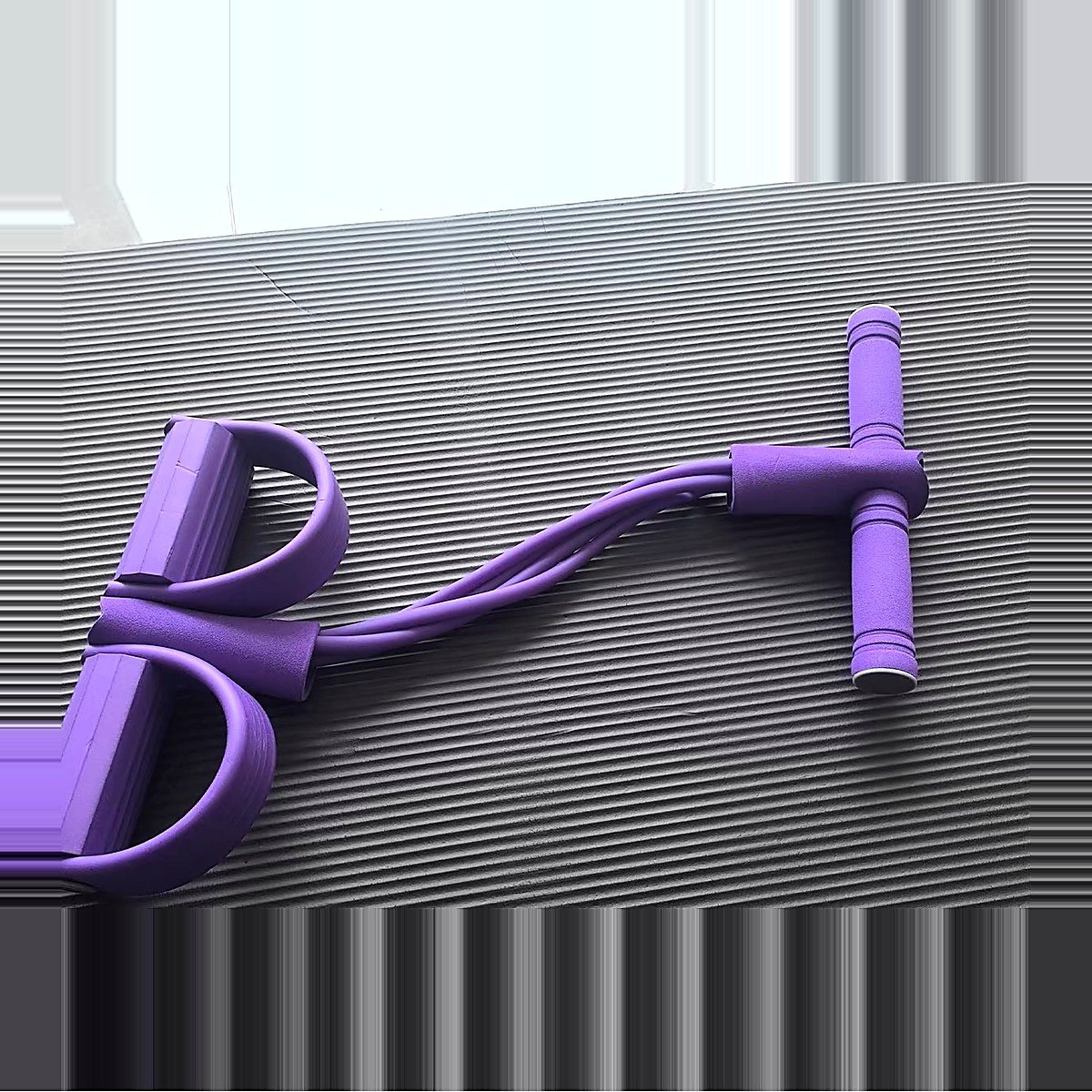
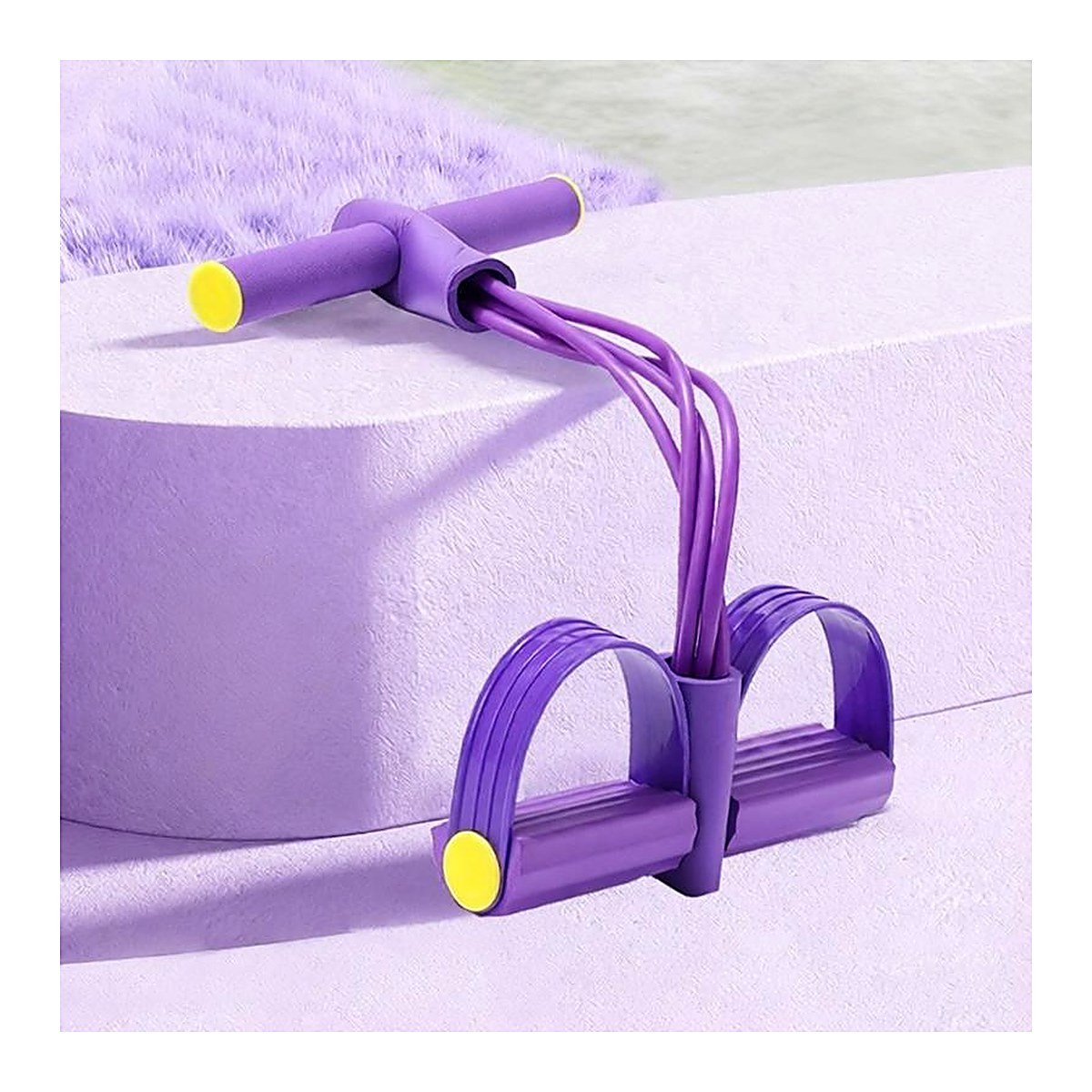
- Pedal bands — you stand or sit on the foot pads and pull the handles toward you. Nothing is bolted, hooked or wedged. It folds into a drawer.
For anyone in a studio, a shared apartment or a dorm room, that last point is usually the deciding one. You can train at 10pm without your downstairs neighbour hearing a single plate settle.
What to check before you buy
Almost every pedal band looks the same in a product photo. These four details are what separate one that lasts from one that annoys you by week two.
1. The grip
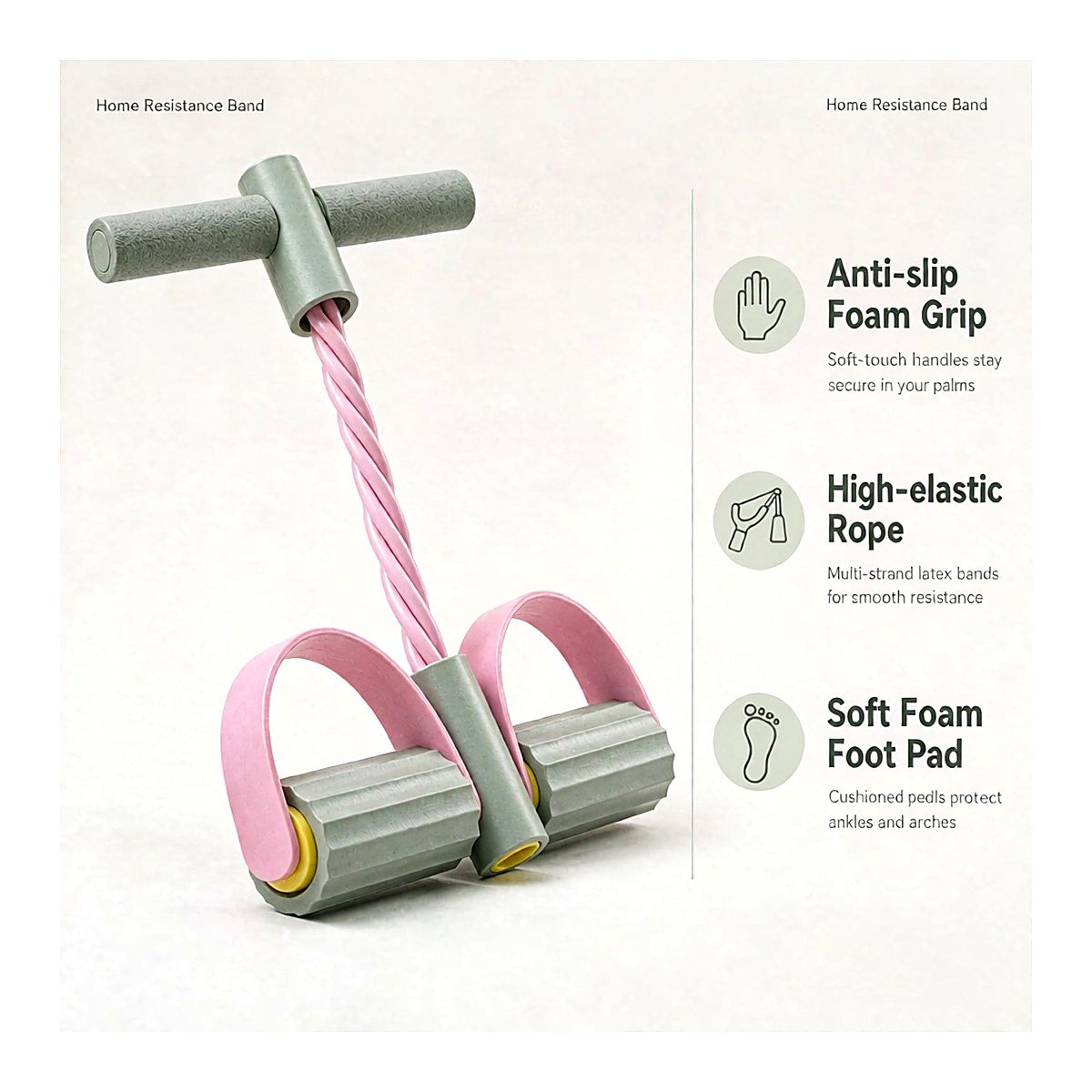
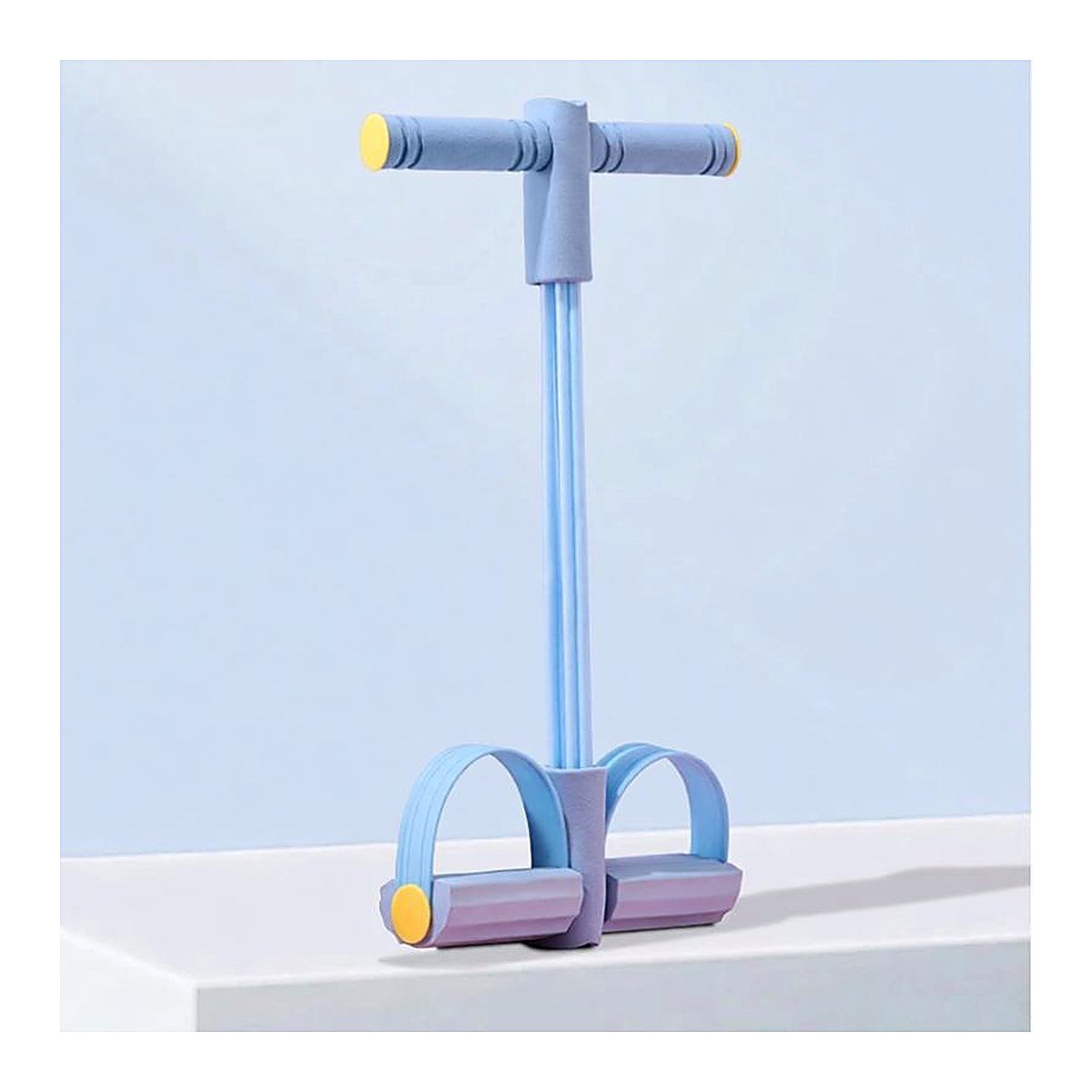
Handle grips come in hard plastic or foam. Hard plastic is fine for the first few sets and unpleasant once your hands get damp. Foam holds on. If you plan to train without chalk or gloves — most people do — foam is worth waiting for. Ours uses a foam grip on all five colourways.
2. The cords
The cords are the part that wears out. Look for latex rubber rather than a flat elastic strip: latex returns to its original length far more consistently, while flat elastic slowly stretches out and stops giving you the resistance you paid for. Our four-cord models use high-elastic latex cords.
3. The foot pads
This is the detail nobody mentions. Thin pads dig into the arch of your foot during seated rows, and hard edges scratch wood and vinyl flooring. A soft, reasonably wide pad solves both. It also means you can train barefoot, which most people prefer indoors.
4. Pedal or door anchor
If you rent, this is the only question that matters. Pedal models put all the load through your own foot; door-anchor models put it through the door frame. A pedal band is the version that leaves no trace when you move out.
How much resistance do you actually get?
This is the fairest criticism of any band: the resistance is not constant. A band is lightest at the start of a movement and heaviest at the end. A dumbbell feels the same from the first inch to the last.
That is not automatically a downside. The way a band loads a muscle — light at the stretched position, hard at the contracted position — matches how most people actually get stronger, because the hardest part of the movement arrives where you are strongest. Where it falls short is at the very start of a press or a row, which is why the rep ranges above sit at 12–15 rather than 5–8.
How to make it harder without buying anything
Most people reach for a heavier band far too early. There are four ways to increase difficulty using the band you already own, and they work in this order.
- Slow the return. Take three seconds to let the band pull your arms back instead of one. This is the single biggest change you can make, and it costs nothing.
- Shorten the band. Step wider on the foot pads, or grip lower down the cord. Less slack means more tension at the start of the rep.
- Add a pause. Hold the contracted position for two seconds at the top of every rep.
- Add a set. Three sets becoming four is a real increase in weekly volume — more meaningful than a slightly heavier band.
Only after all four stop working is a second band worth buying. Given they run $4.00, that day is not far off — but most people quit long before it arrives, and the reason is almost never the equipment.
Common mistakes that stall progress
None of these are about the band. All four show up in the first two weeks.
- Training every day. Muscles adapt during recovery. Three sessions with a rest day between them beats seven rushed ones.
- Chasing the burn instead of the rep count. A set is finished when the last rep is hard, not when it hurts.
- Changing the plan every week. Pick the three-day schedule above and run it for four weeks before you change anything.
- Skipping the cool-down. The band is genuinely better than most tools for steady stretching, and it takes three minutes.
Six exercises that cover your whole body
Do these in order. Each one lists the setup, the target rep range and the mistake that costs most people their results.
1. Seated row — back and biceps
Setup: Sit on the floor with your legs extended through the foot pads. Hold the handles with palms facing each other and pull toward your ribs, squeezing your shoulder blades together at the end.
Reps: 3 sets of 12–15
Watch out for: Rushing the return. Let the band pull your arms back over a full two seconds; that eccentric half is where most of the growth happens.
2. Chest press — chest and triceps
Setup: Loop the cords behind your upper back, or stand on the pads and press forward and up until your arms are almost straight.
Reps: 3 sets of 12–15
Watch out for: Letting your shoulders shrug up toward your ears. Keep them pulled down and back.
3. Bicep curl — arms
Setup: Stand on the foot pads with your feet shoulder-width apart, grip the handles with palms up and curl to shoulder height.
Reps: 3 sets of 12–15
Watch out for: Swinging your elbows forward to cheat the top of the rep. Pin them to your sides.
4. Lateral raise — shoulders
Setup: Stand on the pads and raise your arms out to the sides until they reach shoulder height, keeping a slight bend in the elbow.
Reps: 2–3 sets of 12
Watch out for: Going heavier than you can control. Shoulders respond better to smooth, slow reps than to load.
5. Leg press — quads and glutes
Setup: Lie on your back, hook the foot pads over the soles of your feet and press away, then bend your knees to come back.
Reps: 3 sets of 15
Watch out for: Letting your lower back arch off the floor. Keep your ribs down and your core braced.
6. Cool-down stretch
Setup: Loop the band around one foot and gently draw the leg toward you, holding 30 seconds per side. Repeat for the hamstrings and calves.
Reps: 2 rounds, 30s each side
Watch out for: Bouncing into the stretch. Hold it steady instead.
A three-day week, fifteen minutes a session
Three sessions is enough to build a habit and enough to see change. Give yourself a rest day between each one.
| Day | What you do | Time |
|---|---|---|
| Monday | Seated row, chest press, bicep curl | 15 min |
| Wednesday | Lateral raise, leg press, cool-down stretch | 15 min |
| Friday | All six movements, one set each to start | 18 min |
Which colourway should you pick?
All five train identically — same four latex cords, same foam handle, same soft foot pad. The colour is the only variable.
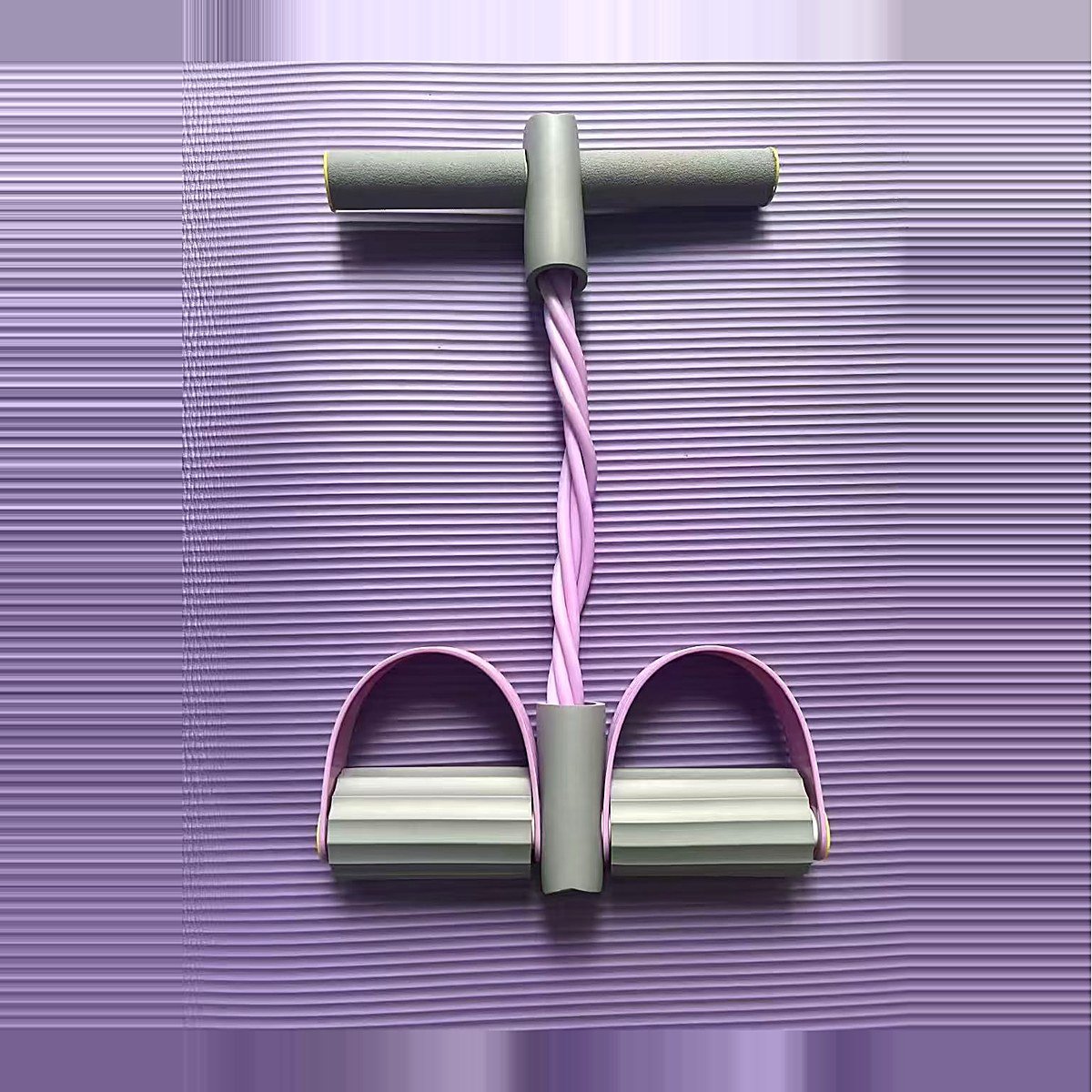
- Purple and sky blue — the four-cord T-handle models, and the two most popular picks. Purple · Sky blue · Steel blue
- Grey with purple or pink cords — the foam-handle pair, if the T-handle shape is not for you. Grey and purple · Grey and pink
Prices start at $4.00 with free US shipping and 30-day returns. Everything ships from our warehouse in California, and most US orders arrive in 3–5 business days.
Frequently asked questions
Is a $4 resistance band strong enough to actually build muscle?
For a beginner working at 12–15 controlled reps, yes. Muscle responds to tension and to the number of hard sets, not to the price tag on the equipment. You will outgrow a band long before you outgrow the habit — and if you do, adding a second band is still cheaper than one month of most gyms.
How much space do I need?
About two square feet to store it, and roughly the length of your body to use it. Seated and lying movements all fit inside a normal apartment living room.
Will it damage my floor or my door?
No door contact at all — that is the point of a pedal band. The soft foot pads are the only part touching the ground, so wood and vinyl flooring are fine.
Can I use it for stretching and mobility?
Yes, and it is one of the better uses. Looping the band around a foot lets you hold a hamstring or calf stretch steadily instead of bouncing, which is what the cool-down section above does.
How long does shipping take?
Free US shipping, with most orders arriving in 3–5 business days. If it is not right for you, returns are open for 30 days.
Start with one band. See if you keep the habit.
Five colourways, $4.00 each, free US shipping from California. If fifteen minutes three times a week is not for you, send it back within 30 days.
Consult a physician before starting any exercise programme. This guide describes general fitness activity and is not medical advice.