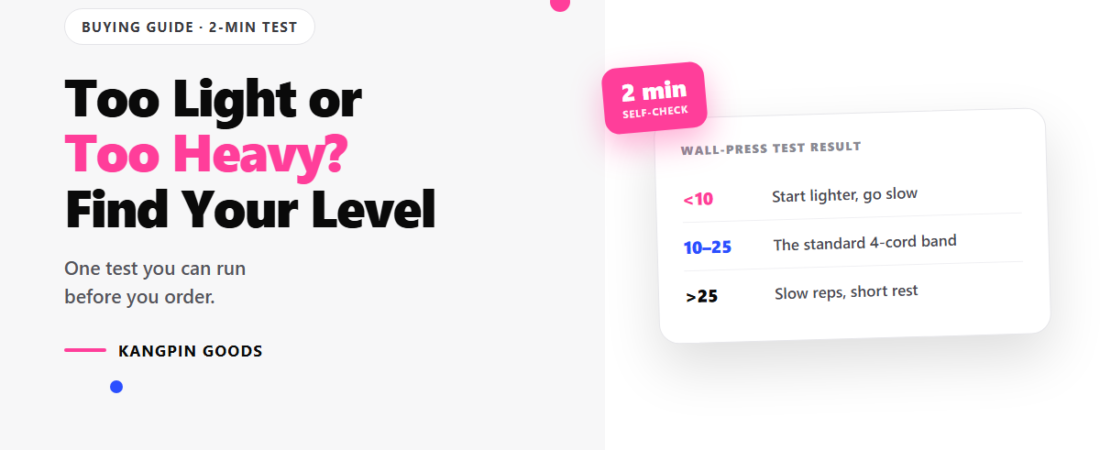
Most people who give up on a resistance band do not give up because the band is bad. They give up because it is the wrong level. Too light, and nothing feels like it is happening. Too heavy, and every rep turns into a wrestling match you lose. Here is how to pick correctly the first time.
This is the question I get most often, and it is a fair one. The band costs four dollars, so a wrong guess is not a financial disaster — but it is a wasted two weeks of your routine. Let us get it right.
Why the word “resistance” trips people up
Here is the thing nobody tells you at the point of sale: a resistance band does not have one resistance. It has a range, and that range depends on how far you stretch it.
A rubber band pulled to double length is not pulling back twice as hard as one pulled to 1.3x. It is pulling back considerably harder, and the curve is not a straight line. Coil springs and weight stacks behave predictably: 20 lb is 20 lb through the whole movement. Latex cords do not.
This matters because when a product says “20 lb”, that number is usually measured at one specific stretch point. At the start of the movement you might feel almost nothing. At the end you might feel everything. Both readings are technically true.
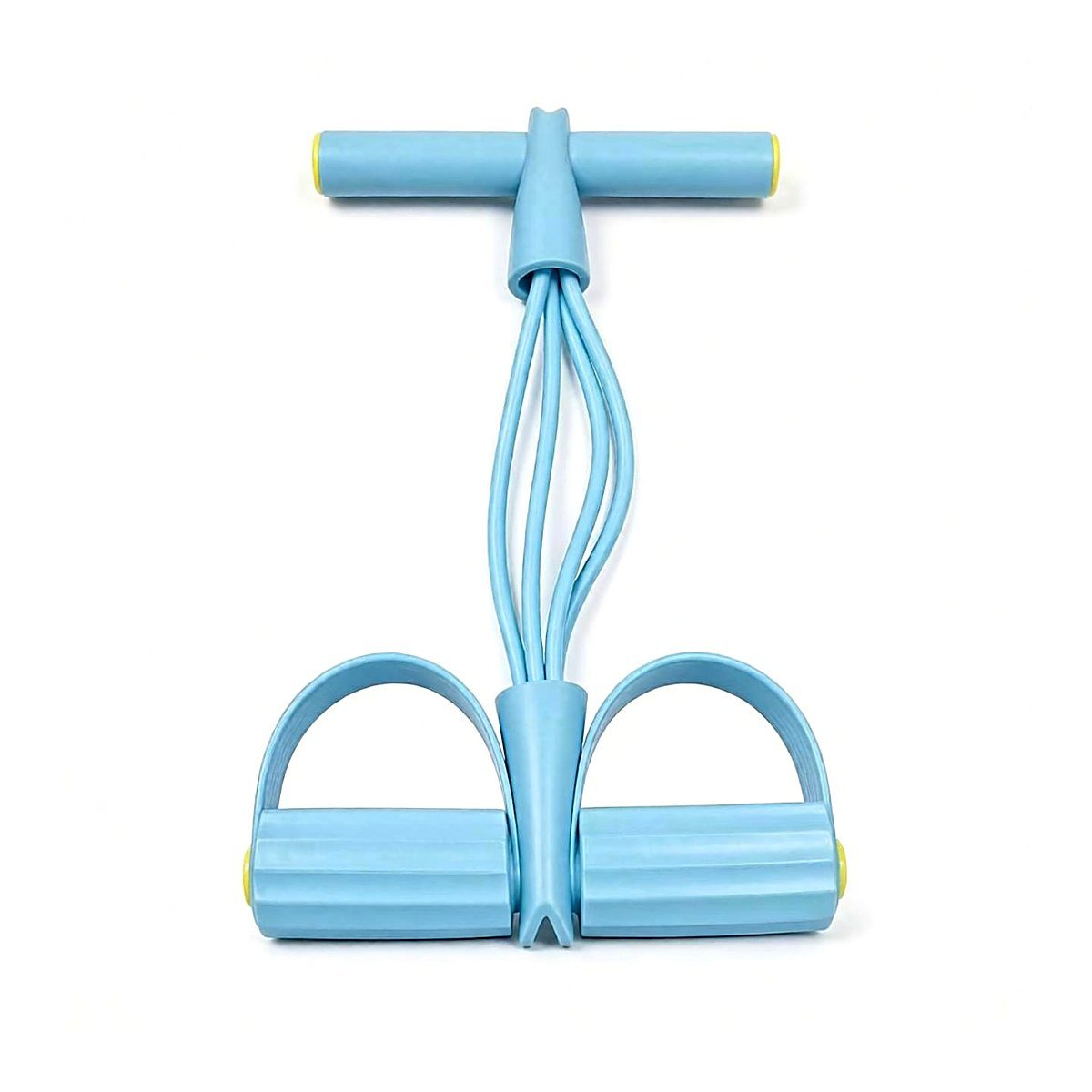
So the honest answer to “how heavy is this band” is: it depends what you do with it. Which is annoying, but it is also the reason a single four-dollar band can work for a beginner and still challenge someone who trains regularly.
Three questions that decide your level
Forget the numbers on the packaging for a moment. Answer these three instead.
1. What can you do right now, today?
Not what you could do at nineteen, and not what you plan to be able to do in three months. Right now.
- You cannot do a single push-up on your knees yet. You are a beginner. A lighter band will still challenge you for weeks.
- You can do 10–15 knee push-ups and a few bodyweight squats. You are in the middle. A standard four-cord pedal band is aimed squarely at you.
- You train with weights or do pull-ups already. You will find a single band light for your strongest movements, and fine for the smaller ones.
2. Which movement are you buying it for?
This is the question people skip, and it is the one that matters most. Your legs are dramatically stronger than your shoulders. The same band that feels easy in a leg press will feel serious in a lateral raise.
If you are buying one band to cover a whole body routine, you are accepting a compromise: it will be slightly light for your legs and slightly heavy for your shoulders. That is normal and it is fine. It is also exactly why the “make it harder without buying anything” tricks in our full-body workout guide matter more than the band itself.
3. How much room are you working in?
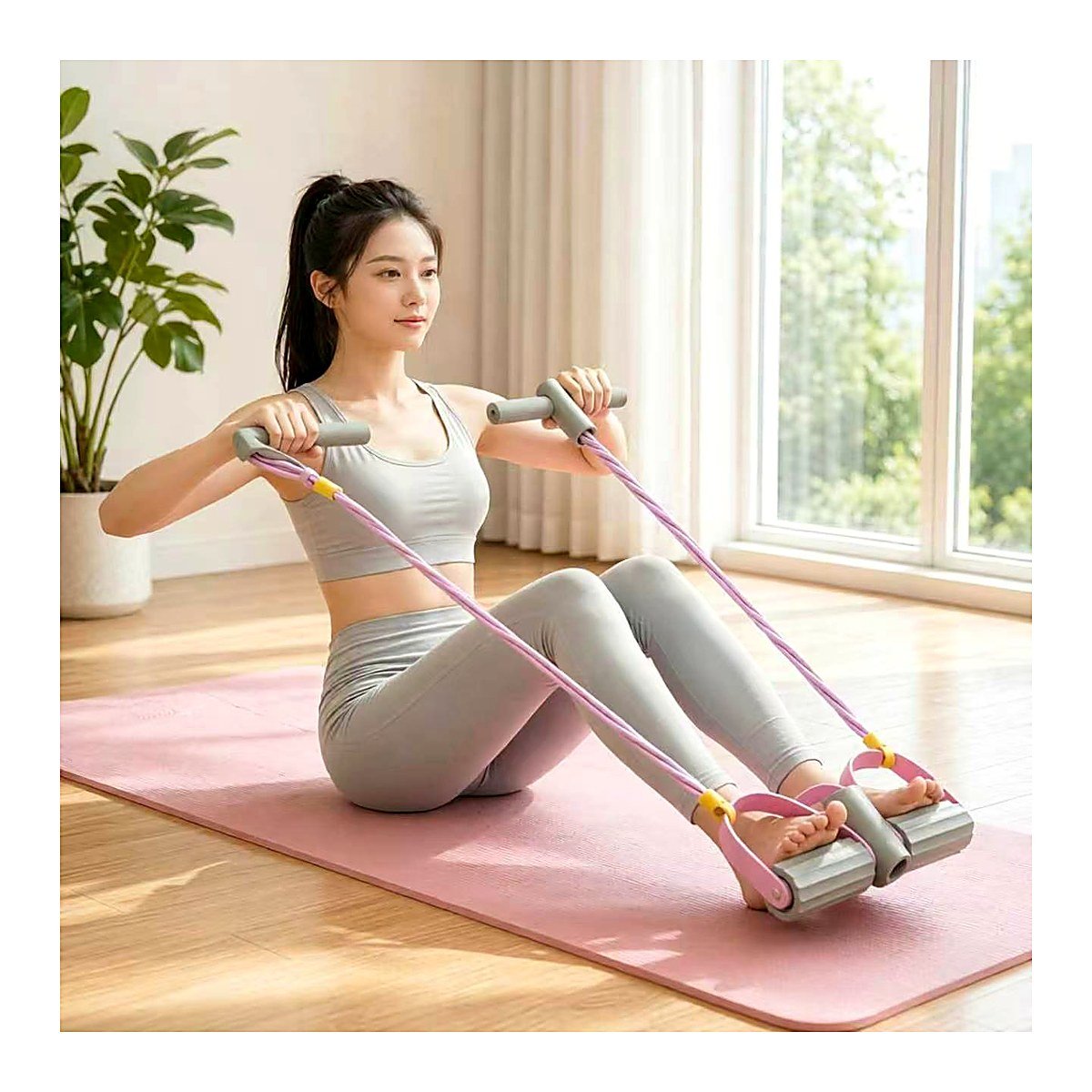
Stretch length equals resistance. A band used in a tight apartment corner is effectively a lighter band than the same band used across a long room, because you simply cannot pull it as far.
In a small space, this works against you in a useful way: the band is kinder, but you will need more reps or slower tempo to feel the work. If you have a longer stretch of floor, the band gets harder on its own.
The two-minute test you can run before ordering
You do not need the band to run this. You need a wall, a towel, and about two minutes.
The wall-press test
- Stand facing a wall, about one arm-length away.
- Place both palms flat on the wall at chest height.
- Lean in, then press yourself back out. Do as many as you can, at a steady pace, until you genuinely could not do one more well.
Read your result:
| Wall presses you managed | What it means | Start with |
|---|---|---|
| Under 10 | Your pressing muscles are untrained | A lighter band, or the standard band with very slow tempo |
| 10–25 | Typical beginner-to-intermediate range | The standard four-cord pedal band |
| More than 25 easily | You have a training background | The standard band, plus shorter rest and slower reps |
That table is a starting point, not a verdict. What matters is that you stop treating the purchase as a guess.
Signals you picked the wrong level
If it is too light
- You can finish 15 reps and feel like you could do 30.
- The last rep looks exactly like the first rep.
- You are bored by the second set.
Do not immediately conclude you need a heavier band. Slow the rep down first — three seconds out, three seconds back. Most “too light” problems disappear at that tempo, and slow reps build more than fast ones anyway.
If it is too heavy
- You cannot complete 8 clean reps.
- You are leaning, shrugging, or swinging to finish the movement.
- Your lower back aches afterward rather than your target muscle.
Shorten your stretch instead of buying something else. Stand closer to the anchor point so the band starts with less tension. It is the same trick as using a shorter range of motion, and it costs nothing.
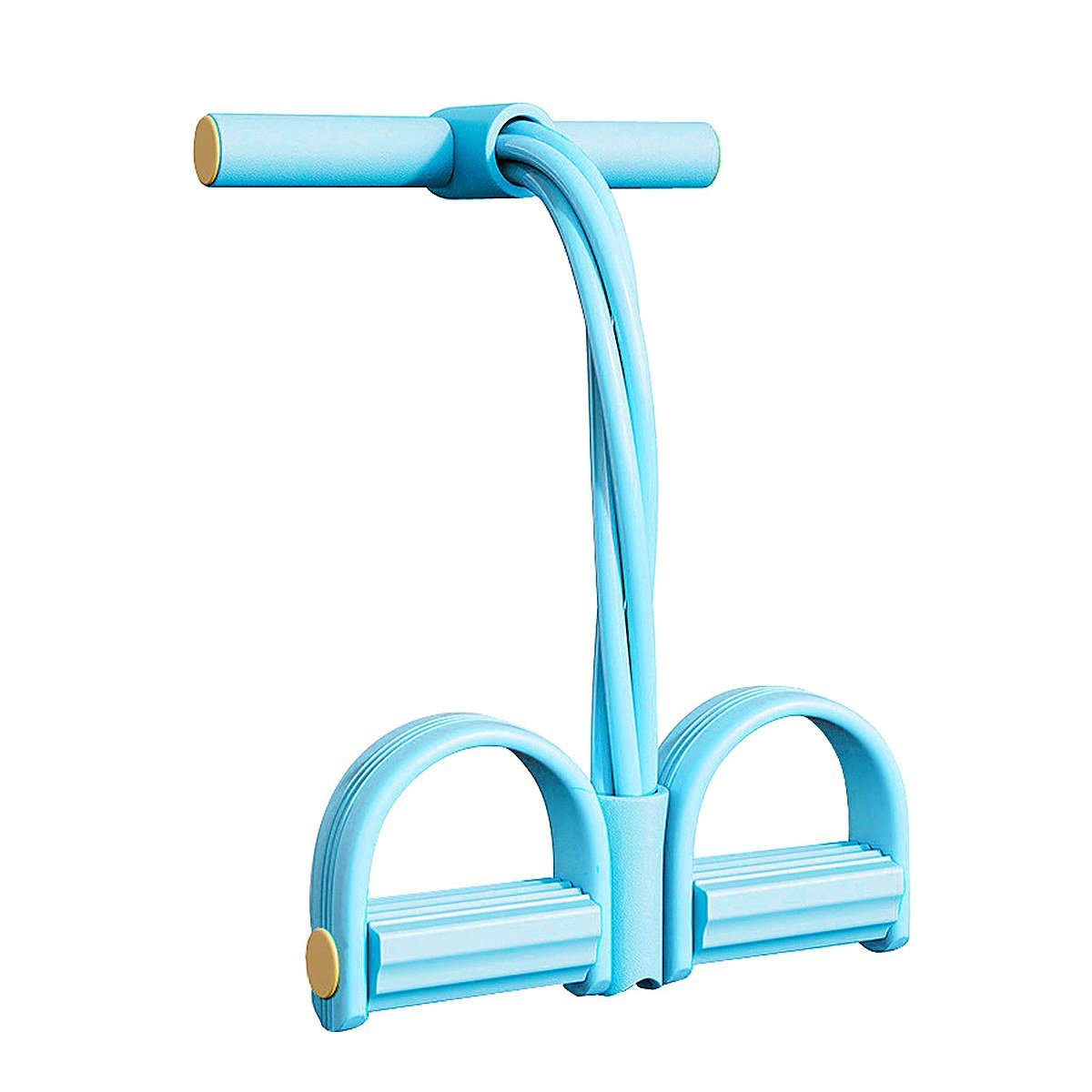
Which of the five colourways should you pick?
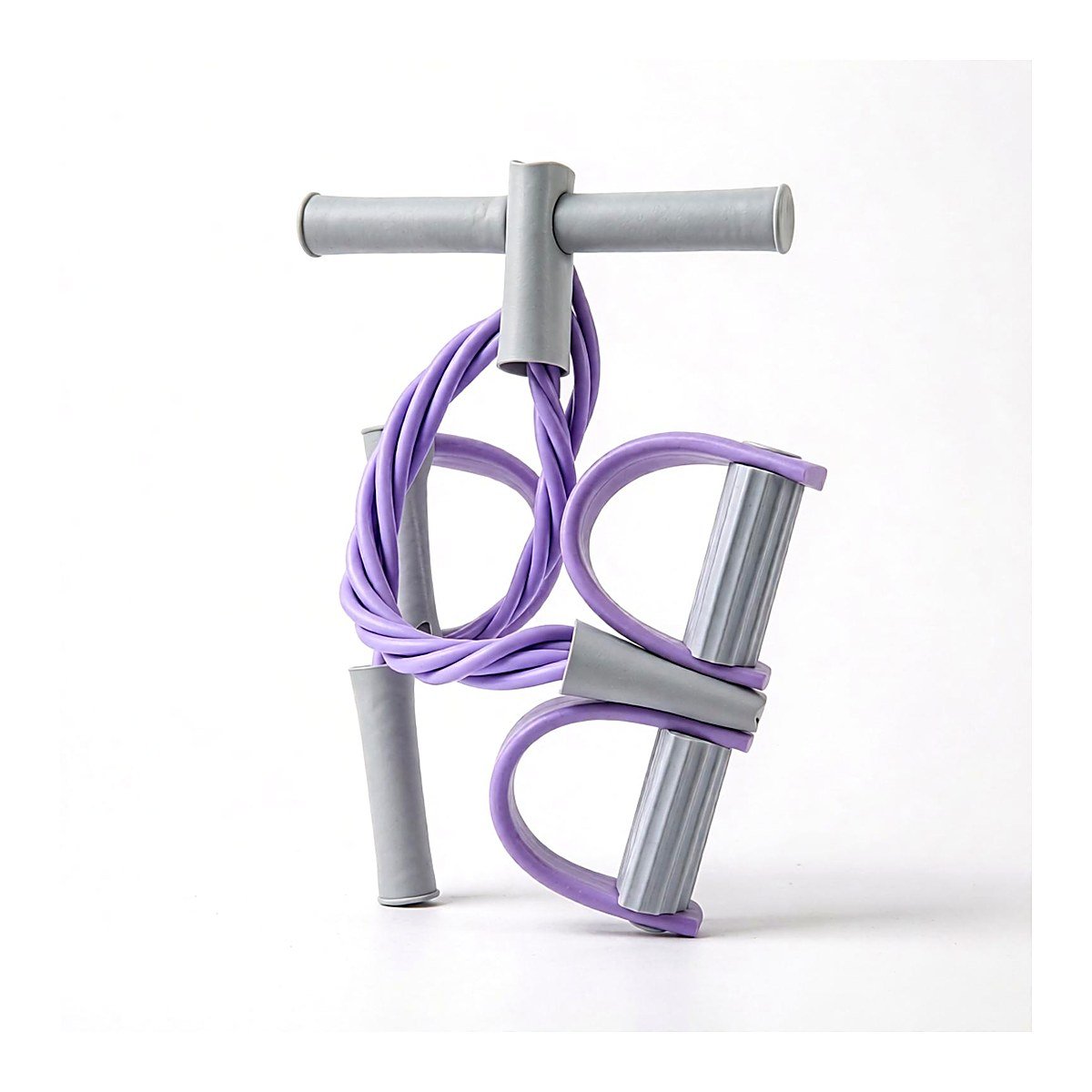
All five bands in our range are the same four-cord pedal design at the same price. The difference is the handle material and the colour, not the strength tier. So the choice is about grip and looks, not about poundage.
T-handle versions — firmer grip
These have a rigid T-shaped handle. They suit pulling movements where you grip with the whole hand: rows, curls, shrugs. If you have larger hands, or you find soft handles slide during a set, go this way.
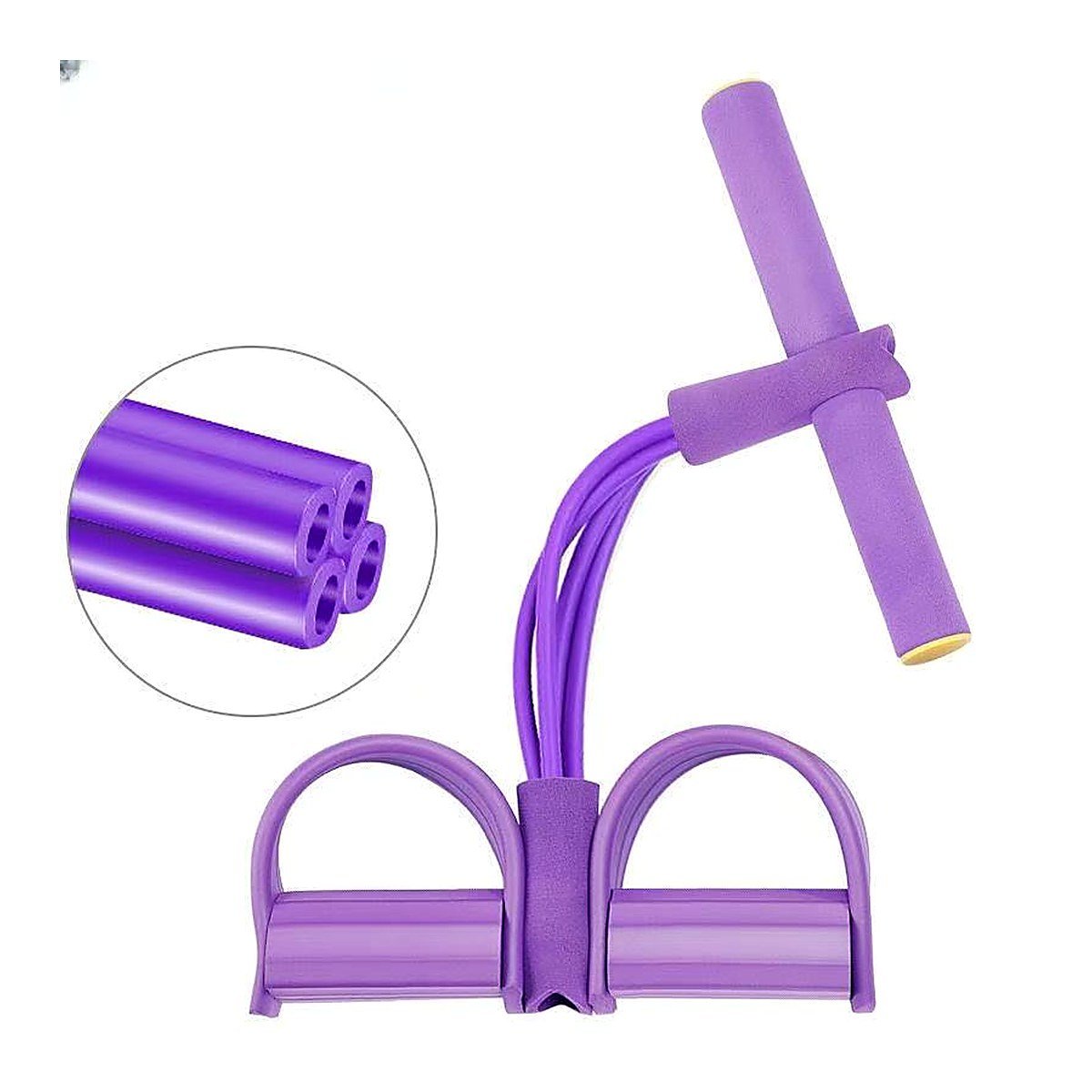
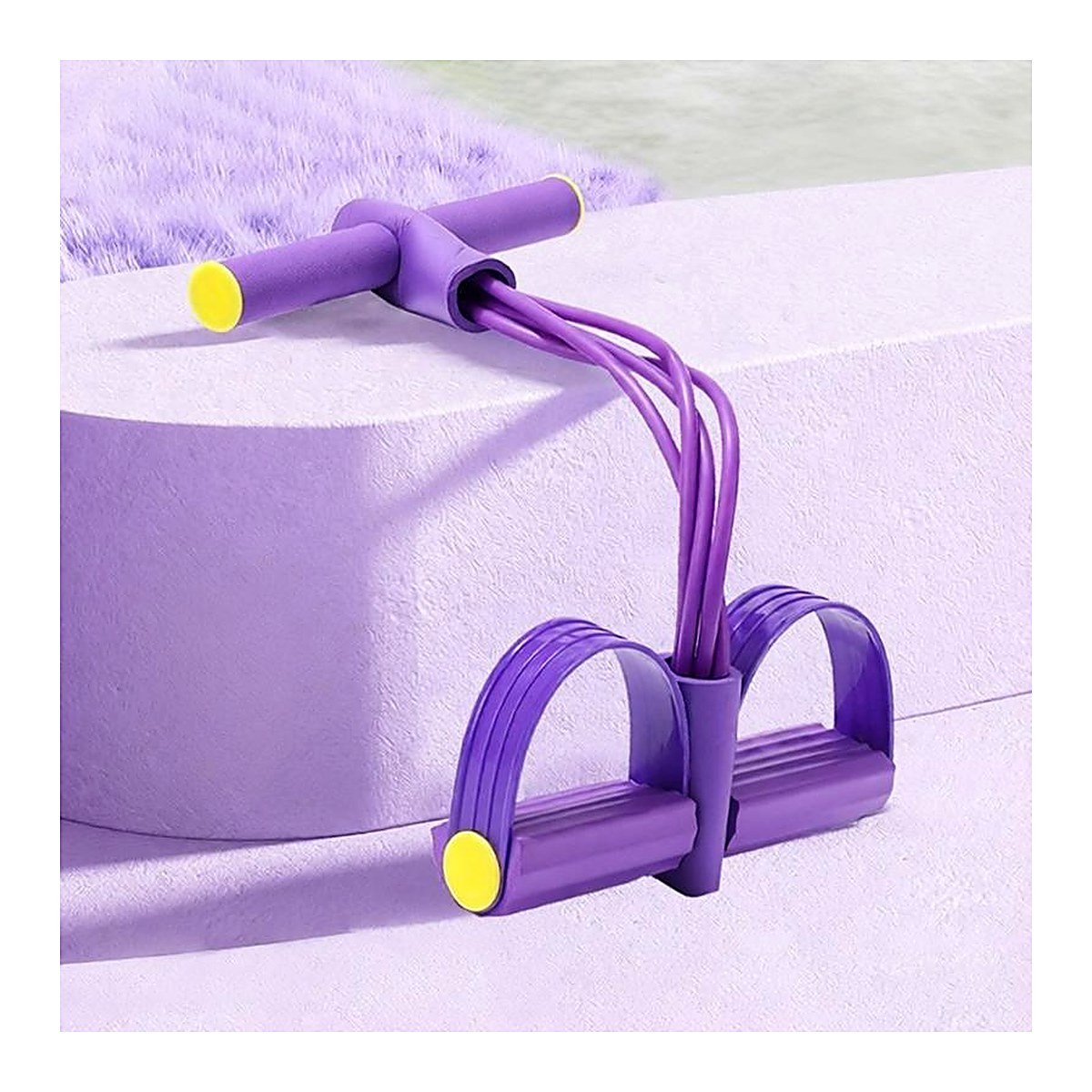
- Purple, four-cord — the most popular colourway
- Sky blue, four-cord — textured anti-slip grip
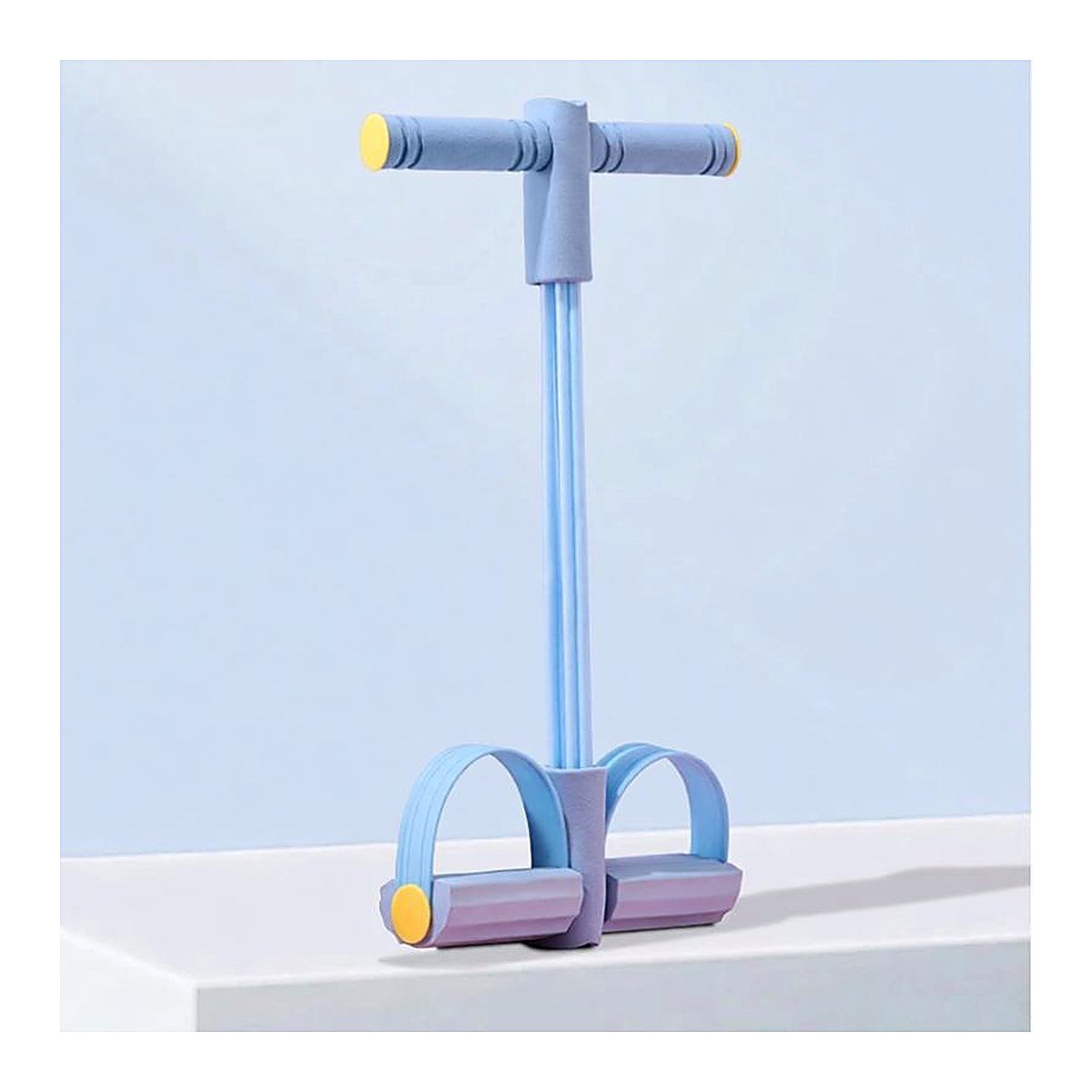
- Steel blue, four-cord — the darkest of the three
Foam-handle versions — softer on the palms
These use a padded foam handle over the same cord design. Kinder on the hands across high-rep sets, and often the better pick if you are new to resistance work and your grip tires before your muscles do.
Do you need to buy more than one?
No, and you should not — not yet.
The single most common mistake is buying a full set of five bands before the first one has been used twenty times. Sets are sold because they are easy to sell, not because beginners need them.
Buy one. Train with it for three weeks. If you are still at it, you will know exactly what you want next — and it will probably be one heavier band for legs, not a whole set.
One last thing about picking a colour
Kitchen gadget and home-gym gear both live in the same apartment. A band you find ugly is a band you will eventually “put away somewhere” and forget about. Pick the one you do not mind seeing on the floor.
Frequently asked questions
Can a single band really work for both my arms and my legs?
Yes, with different rep ranges. Expect 12–15 slow reps for legs and 8–12 for shoulders and arms from the same band. The band does not change; the difficulty of the movement does.
Is four dollars too cheap to be any good?
Four dollars is a reasonable price for a simple latex-and-foam product made at volume. What it is not priced for is a brand name, a printed manual, or a gym-style carrying case. You are paying for the band.
What if I buy the wrong one?
We take returns on unopened items within 30 days. But before sending anything back, try the tempo and stretch-length adjustments above — they solve most mismatches.
How long before I should expect a heavier band?
Three to six weeks of three sessions a week is a realistic window before a standard band starts feeling light on your legs. Your shoulders and arms will want heavier later than that, if at all.
Do I need anything else to start?
A floor you can sit on, a doorway or wall, and fifteen minutes. That is the whole kit. If you want the full routine built around these bands, read the full-body workout guide.
Pick your level, pick your colour
Every band in the range is $4 with free US shipping and 30-day returns. Start with one.
Related reading
- How to Get a Full-Body Workout With a $4 Resistance Band — the complete routine that goes with this band
- All resistance bands in the store